
Last reviewed: July 2026 · Associate disclosure: As an Amazon Associate I earn from qualifying purchases.
Buy a cheap pull-up bar, and you’ll likely know it was cheap on the third set. The screw starts to work loose. The frame wobbles when you reverse direction. A $90 doorframe bar that leaves a dent in your trim is a familiar story. So is the $200 power tower that tips forward every time you kip.
Finding the best pull-up rigs for home gyms in 2026 means sorting through more than 40 distinct freestanding and wall-mounted options on Amazon alone, ranging from $60 folding bars to $900 garage rigs. Most listings skip the specs that actually matter: steel gauge, how the frame behaves under dynamic load, base dimensions. We researched five options across the major categories and broke down what separates the solid picks from the ones you’ll replace in a year.
In This Guide
- What to Look For Before You Buy
- Best Pull-Up Rigs for Home Gyms: Our 2026 Picks
- How We Selected These
- Frequently Asked Questions
- Where to Start
What to Look For Before You Buy
Steel Gauge; The Number Most Listings Skip
Steel gauge works backward: a lower number means thicker steel. An 11-gauge upright is roughly 3mm thick. A 14-gauge frame is about 2mm. That 1mm difference is small on a ruler but significant under load.
For strict pull-ups and controlled movements, 14-gauge holds up fine. Add kipping pull-ups, muscle-up transitions, or a 20-lb vest, and you’ll feel the difference: an 11-gauge rig absorbs the movement; a 14-gauge one vibrates. Budget rigs under $150 almost always use 14-gauge or higher. Consistent 11-gauge construction starts appearing around $280–350. That’s the real price threshold.
Weight Capacity; Static vs. Dynamic Load
Manufacturers list static capacity; how much the rig holds when nothing is moving. But pull-ups aren’t static. A hard kip generates roughly 1.5× your bodyweight in downward force at the top of the swing. A rig rated 300 lbs static may wobble noticeably for a 160-lb athlete kipping with a vest.
A practical rule: choose a rig rated at least 150 lbs above your training weight. If you don’t kip and don’t use added weight, the margin is smaller. If you do either, go higher than the listing suggests.
Base Width and Frame Weight (Freestanding)
For freestanding rigs, wider base equals less tip. A 48-inch H-type base is the minimum for stability under dynamic movement. Frame weight helps too; at 60+ lbs, a rig absorbs force through mass rather than shifting on the floor. If a listing doesn’t mention base dimensions, that’s worth noting.
Wall-mounted rigs sidestep this entirely: force transfers directly into the building structure. If you can wall-mount, stability stops being a purchasing variable.
Ceiling Clearance
Standard pull-ups with feet off the floor need the bar at least 18–24 inches above your reach. For most adults, that means a minimum of 8 feet of ceiling height. Muscle-up practice; where you pull through the bar into a support position above it; needs 9 feet or more, especially if you’re over 5’10”. Under 7’6″ ceiling height, a height-adjustable tower is more useful than a fixed wall-mounted bar.
Best Pull-Up Rigs for Home Gyms: Our 2026 Picks
| Pick | Type | Capacity | Price Range |
|---|---|---|---|
| Best Overall | Freestanding Power Tower | 360–480 lbs | $150–250 |
| Best Wall-Mounted | Wall Multi-Grip Bar | 700 lbs | $200–300 |
| Best Value Wall-Mount | Adjustable Wall Bar | 400 lbs | $100–180 |
| Best for Small Spaces | Compact Freestanding Tower | 250–300 lbs | $80–130 |
| Best Garage Rig | Heavy-Duty Power Cage | 1,500+ lbs | $400–650 |
Best Overall; Sportsroyals Power Tower 5-in-1

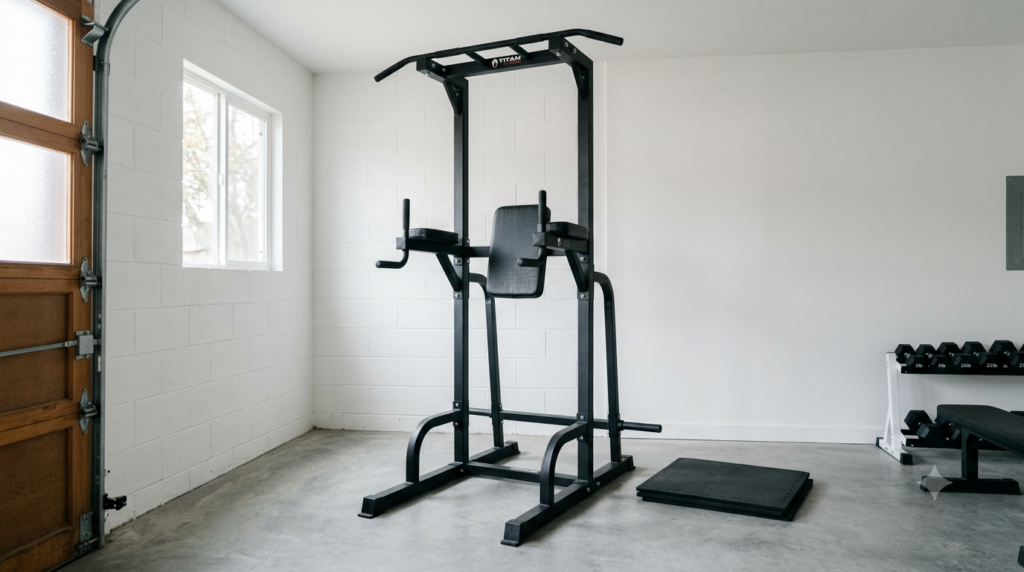
Most people setting up a first home gym don’t want just a pull-up bar; they want a station that covers pull-ups, dips, knee raises, and push-up variations in one footprint. The Sportsroyals Power Tower handles that for under $220 with more stability than most towers at this price.
The base uses an extended H-type design at 39.7 inches, wider than most competitor bases in this range. At 62 lbs, the frame keeps it planted during kipping sets for athletes under 180 lbs. The pull-up bar adjusts to six height settings (64.5″ to 88.2″), which matters if you’re over 6 feet and tired of bent-knee pull-ups on towers built for shorter users. Three grip positions; wide, neutral, close; add variety once you’re past basic pull-ups.
What works: Stability under controlled movement is solid for the price. The dip bars don’t flex perceptibly. Assembly is 40–50 minutes with instructions that are clearer than most at this price point.
What doesn’t: The knee raise backpad foam compresses noticeably within a few months of daily use. It doesn’t affect function, but it’s the weak link. Over 200 lbs with aggressive kipping, the frame does shift slightly; not unsafe, but you’ll feel it. This rig is for controlled movement, not CrossFit-style kipping volume.
Specs: 360–480 lbs capacity (static) · Base: 39.7″ H-type · Height: 6 settings (64.5″–88.2″) · Frame weight: 62 lbs · Footprint: ~48″ × 52″
Best for: Home gym beginners and intermediate athletes who want a multi-function station without drilling anything.
→ See all freestanding pull-up rigs →
Best Wall-Mounted; REP Fitness Heavy Duty Multi-Grip Pull-Up Bar

- Versatile Wall Mount Pull-Up Bar: Build a stronger home gym with a heavy duty pull up bar designed for wall-mounted training, garage workouts, and upper body strength routines. Choose the straight bar option for classic pull-ups or the multi-grip design for more hand positions.
- Multiple Grip Options for Better Training Variety: The multi-grip pull-up bar supports traditional, neutral, close, wide, and angled grip positions, helping you target your back, arms, shoulders, and core from different angles. It is ideal for pull-ups, chin-ups, hanging knee raises, and calisthenics work.
- Heavy Duty Steel Construction: Built with durable steel and 1.25-inch thick bars, this wall mounted pull up bar is made for serious strength training at home. When properly installed, the multi-grip version is rated to handle up to 700 lbs for dependable daily use.
- Band, Ring, and Strap Compatible: Add pull-up assist bands, gymnastic rings, ab straps, or suspension trainers to expand your workout options without crowding your space. This makes it a practical piece of home gym equipment for strength training, bodyweight exercise, and accessory work.
- Space-Saving Fitness Equipment for Home: Designed for garage gyms, basement setups, and dedicated workout rooms, this mounted pull-up bar keeps your training area clean and efficient. The wall mount design creates a permanent station for pullups, chinups, muscle-ups, and upper body conditioning.
The REP Fitness wall-mounted bar is what most serious home gym owners end up buying after they’ve outgrown a freestanding tower. It’s 11-gauge steel throughout, rated to 700 lbs; which isn’t just marketing headroom. Five grip positions (standard, wide, neutral, close, angled) in a single bar let you vary grip and shoulder angle without swapping equipment.
The dimensions matter for installation planning: 50.75″ wide, projecting 21.5″ from the wall. You’ll need 16″ on-center stud spacing; most North American homes have this; if yours are 24″ on-center, check the mounting pattern before ordering. Plan for two people and 90 minutes if you’ve done wall anchoring before, longer if you haven’t. Gymnastic rings and TRX straps thread off the structure easily.
What works: Zero floor footprint, permanent anchor stability, and multi-grip positions that allow real training variety. The knurling is aggressive enough to be functional without gloves. The 700-lb rating gives genuine headroom for weighted pull-ups and loaded movement.
What doesn’t: It’s a commitment. Drilling wrong means patching drywall. The 21.5″ wall projection creates a dead zone between the wall and the bar; in smaller rooms this can feel awkward depending on your layout. It also costs more than most wall-mounted options in this category.
Specs: 700 lbs capacity · 11-gauge steel · Width: 50.75″ · Wall projection: 21.5″ · Grip positions: 5
Best for: Homeowners with a garage or dedicated gym room who train at any meaningful intensity and want a permanent, expandable setup.
→ See all wall-mounted pull-up bars →
Best Value Wall-Mount; Titan Fitness Adjustable Depth Wall-Mounted Pull-Up Bar

- HEAVY-DUTY 400 LB FRAME: Built from 11-gauge steel with a sleek powder-coated black finish, this wall-mounted pull-up bar supports up to 400 LB for maximum stability and safety in both home and gym setups.
- 50" ADJUSTABLE GRIP BAR: Features a 50" long bar with a 32mm smooth, powder-coated grip for comfortable pull-ups and chin-ups. Perfect for home workout spaces.
- TWO DEPTH MOUNTING OPTIONS: Choose between a 14" or 22" wall distance to suit your space and workout needs - ideal for both compact areas and movements requiring extra clearance.
- MULTIPURPOSE TRAINING STATION: Use it as a dedicated pull-up or ring station, or daisy-chain multiple units together to create a custom wall-mounted pull-up system.
- QUICK AND EASY INSTALLATION: Installs on wood studs or concrete walls with included mounting hardware. Designed for standard 16" stud spacing but compatible with setups up to 50" apart.
If you want the security of wall mounting without the REP price point, the Titan Fitness adjustable-depth bar is the practical alternative. It mounts at either 14″ or 22″ from the wall; useful when room layout or stud placement limits how far the bar can project. The 52″ bar width handles wide-grip pull-ups, and the 400 lb rating covers most bodyweight training reliably.
Titan ships primarily direct rather than through Amazon, so availability and pricing can vary. Confirm stock before planning your purchase timeline.
What works: The adjustable projection depth is a genuine differentiator; most wall bars are fixed. Choosing 14″ vs. 22″ from the wall matters in a tight garage or basement with limited depth. Build quality is consistent with what Titan ships across their product line.
What doesn’t: One grip position (straight bar only). If neutral or angled grips matter to your training, this won’t give you that. Also 400 lbs versus REP’s 700 lbs: fine for strict bodyweight work, but less margin for loaded training or heavier athletes with loaded vests.
Specs: 400 lbs capacity · Width: 52″ · Wall projection: 14″ or 22″ (adjustable) · Bar diameter: 32mm
Best for: Anyone who wants a permanent wall anchor on a budget, or needs the flexibility of adjustable projection depth.
Best for Small Spaces; Mikolo Compact Freestanding Pull-Up Tower

Not everyone has a garage or permission to drill. In an apartment, a rental, or a room without obvious stud placement, a compact freestanding tower covers the essentials without claiming half your floor space.
The Mikolo compact tower handles pull-ups, dips, and leg raises in a footprint small enough to push into a corner. Height adjusts across 10 positions; useful for 7’6″–8′ apartment ceilings where a fixed-height bar might not leave enough clearance. Weight capacity sits at 250–300 lbs static, which holds up for controlled strict movements.
What works: It’s clear about what it is. For strict pull-ups, chin-ups, and hanging leg raises, it works without excessive wobble. Assembly is 30–40 minutes. The price is low enough to be a reasonable trial before committing to a drilled installation.
What doesn’t: Don’t kip on this. The base isn’t wide enough and the frame isn’t heavy enough to absorb explosive movement safely. It’s a strict-movement rig, and that’s a real limitation once you progress. Padding quality is also basic.
Specs: ~250–300 lbs capacity (static) · Height: 10 adjustable positions · Compact footprint
Best for: Apartment gym setups, renters, beginners working on form, or anyone who wants to build a training habit before investing in a permanent installation.
Best Garage Rig; Mikolo Power Cage with Lat Pull-Down System

This is a different category from the other four picks. It’s not a pull-up bar or a compact tower. It’s a full power cage, the kind of structure that equips a CrossFit box. Rated to 1,500 lbs, 2″×2″ steel construction throughout, anchored at four points. Pull-ups happen off the top of the cage frame at your preferred height setting. The included lat pull-down and cable crossover system turn it into a near-commercial training station.
The footprint is significant; plan for 60-plus inches wide and a 7-by-8-foot workout zone minimum. Assembly is a two-person job taking 2–4 hours, and this isn’t something you’ll relocate easily once it’s set up. But if you’re building a proper home gym with the intention of training hard for years, starting with a cage frame makes everything else modular: barbell system, band pegs, dip handles, all additions rather than replacements.
What works: Pull-ups off a 1,500-lb-rated frame are stable in a way that makes stability a non-topic. The multi-function capability means this single piece replaces 4–5 separate items. Cable crossover and lat pull-down are functional additions for a garage setup, not just marketing extras.
What doesn’t: It’s expensive, large, and permanent in practice. Selling or relocating it if your situation changes isn’t simple. Also verify ceiling height: the cage structure needs 8+ feet clear, and you’ll want more for full-hang pull-ups with feet off the floor.
Specs: 1,500 lbs capacity · 2″×2″ steel uprights · Includes: lat pull-down + cable crossover · Assembly: 2–4 hours, 2 people required
Best for: Serious home gym builders who want a permanent, multi-function setup and plan to train consistently for years.
→ Best Pull-Up Rigs for Garage Gyms →
How We Selected These
Each pick was evaluated on five criteria: steel gauge and build quality, weight capacity under dynamic load (not just the static rating), stability during momentum-based movement based on verified buyer reports, footprint relative to usable workout space, and long-term value based on real user reports after 12+ months of regular ownership. The goal was to identify the best pull-up rig for a home gym at every budget and space constraint; not just the most popular listing. Products were excluded for inflated capacity claims, poor assembly instruction quality, and frames repeatedly reported to flex under dynamic load. No product in this guide was included because of affiliate commission rate.
Frequently Asked Questions
What’s the difference between a pull-up rig and a power tower?
Not sure whether you need a simple bar or a full rig in the first place? Our pull-up bar vs pull-up rig comparison breaks down exactly where the line is. A power tower is a freestanding structure that combines a pull-up bar, dip bars, and a knee raise station in one compact unit; designed for home use and moderate loads. A pull-up rig covers a broader range: wall-mounted bars, freestanding cage systems, and modular structures built for heavier dynamic loads. Power towers prioritize small footprint and lower cost; rigs prioritize capacity and expandability.
How much ceiling height do I need?
For standard pull-ups with feet clear of the floor, 8 feet is the practical minimum for adults up to 6’2″. For muscle-ups, where you pull through the bar into a support position above it, plan for 9 feet or more. Spaces under 7’6″ can work with adjustable-height towers set to a lower bar position, but full-range movement will be restricted.
Is a freestanding or wall-mounted rig better for home use?
It depends on whether you own your home and how hard you train. Wall mounting eliminates floor footprint, transfers force directly into your building structure, and stays stable under heavy dynamic loads, but it’s permanent. Freestanding rigs are portable and rental-friendly; at the heavy-duty end (60+ lb frames, wide H-base), freestanding stability is close to wall-mounted for controlled movement. If you own and plan to train hard long-term, wall mounting is usually the better investment. Still not sure? Our full wall-mounted vs freestanding pull-up rig comparison breaks down cost, installation, and weight capacity side by side.
What weight capacity should I look for?
Don’t use your bodyweight alone as the baseline. Add any weight you train with (vest, belt), then account for dynamic force: kipping movements generate roughly 1.5× your bodyweight in downward force. A practical starting point is the listed capacity minus your training weight. If that remainder is under 150 lbs, you’re pushing the engineering margin. Go higher. Our full weight capacity guide breaks down static vs. dynamic ratings by rig type in more detail.
Can I attach gymnastic rings or a TRX to a pull-up rig?
Yes, most wall-mounted bars support ring and strap attachments directly. REP Fitness and Titan wall-mount bars have enough structural depth to thread ring straps cleanly. For power towers, check that the pull-up bar isn’t enclosed by vertical uprights on both sides; some designs don’t give rings room to hang and swing freely. Cage-style rigs support rings off the top frame with no modification.
Where to Start
If you’re not sure which type fits your space or training level, the freestanding rig guide and wall-mounted bar guide go deeper into each category. For ceiling and joist questions before you drill anything, see the ceiling joist requirements guide. And if you’re working toward your first unassisted pull-up, the pull-up progression guide for beginners is a better first step than any piece of equipment. You can also browse the full selection of pull-up rigs on Amazon for current pricing and availability; all five picks in this guide are listed there.
*As an Amazon Associate, PullUpRigs.com earns from qualifying purchases. Prices and availability are subject to change without notice.